On this page:
On January 23, 1868, a bill was presented to the new Ontario legislature to regulate the practice of dentistry in Ontario. An Act Respecting Dentistry was passed on March 3, 1868, and full powers of licensing and regulating were placed in the hands of the dental profession.
The Act was the first legislation in the world to grant self-regulation to dentists. Prior to the Act, frauds and imposters with little-to-no medical knowledge and skills advertised themselves as dentists. In the absence of any standards and regulations, the public had no means to distinguish good dentistry from bad, and it put them in danger of injury, infection and even death.
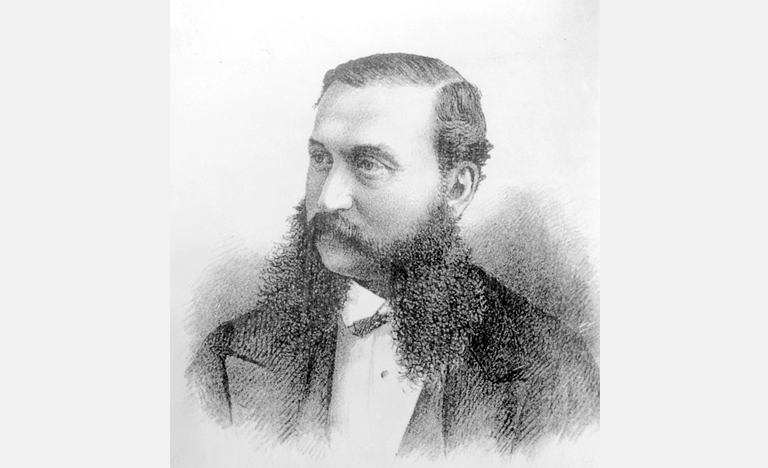
Thanks in large part to the work of one determined Ontarian, Barnabas Day, the ODA addressed an urgent need for trained, educated dental professionals, and took action to help bring Ontario’s dental practices out of the dark ages.
Today, the Ontario Dental Association represents more than 11,000 members, or nine out of 10 dentists in Ontario. Read more about our mission and values.
Dawn of the ODA
Barnabas W. Day was born on a farm near Kingston, Ont., on July 2, 1833. Drawn to medicine in his early 20s, Day served as an apprentice with a local dentist, then established a rudimentary practice of his own in 1856. Day later enrolled in the faculty of medicine at Queen’s College, graduated with a medical degree in April 1862, and was soon recognized as one of Ontario’s most educated and skilled dentists.
In addition to the training and experience that set him apart from his peers, Day was said to possess a charm that allowed him to befriend high-ranking public figures. Thanks to his connections with the political elite, Day learned that Canada West (now known as Ontario) would be altered with the formation of the Dominion of Canada. He saw before him an atmosphere of change, and an opportunity to address the on-going problem of untrained, unlicensed dentists.
By 1867, it was apparent to Barnabas Day that charlatans were destroying dentistry’s reputation. These untrained dentists relied on outrageous advertisements and dubious practices to attract clients, many of whom had little choice but to submit themselves to torturous, unsanitary treatment. Most of Canada West’s population were left to the mercy of hucksters and con artists, and many were terrified by the thought of dental treatment. Nonetheless, there was a small group of formally trained dentists with the will to make a difference. These men were often physicians with an interest in dentistry, who had studied in dental schools in the United States or had served an apprenticeship with an experienced dentist.
Day’s plan to resolve the long-standing issues with his profession was to form an association with the few trained professionals who were qualified to practise. Together, these men would use the strength of an organization ‒ a dental association ‒ to lobby the Ontario legislature to regulate dentistry. Day began this monumental process by inviting Ontario’s reputable dentists to a meeting in Toronto on January 3, 1867.
While it’s unclear how many dentists were operating in Canada West on January 3, 1867, when Day arrived in Toronto, but just eight dentists were waiting for him at the Queen’s Hotel. Much to Day’s dismay, M. Edward Snider was the only dentist from Toronto, Canada West’s hub of dentistry. The seven other men present were all from eastern Ontario: Franklin G. Callender, J. Stuart Scott, MD, Henry Tunstall Wood, Antoine Lalonde, Curtis Strong Chittenden and D.A. Bogart. Despite this small turnout, Day’s pluck and initiative had caught the profession’s attention, and other dentists unable to attend this first meeting sent letters of support for the formation of the organization. Among the dentists who could not attend the meeting was George Van Nest Relyea, whose membership was so desirable that the nine attendees elected him to membership in his absence.
Small turnout or not, it was at this January meeting that these men, led by Barnabas Day, decided to build an association that would formulate a law requiring dentists to pass an examination. From humble beginnings, these men built the first official organization of dentists in Canada, the Dental Association of Canada West, today known as the Ontario Dental Association. Day was elected president of this new association, and selected to chair a committee to draft a dental act that the association would present at the next session of Parliament.
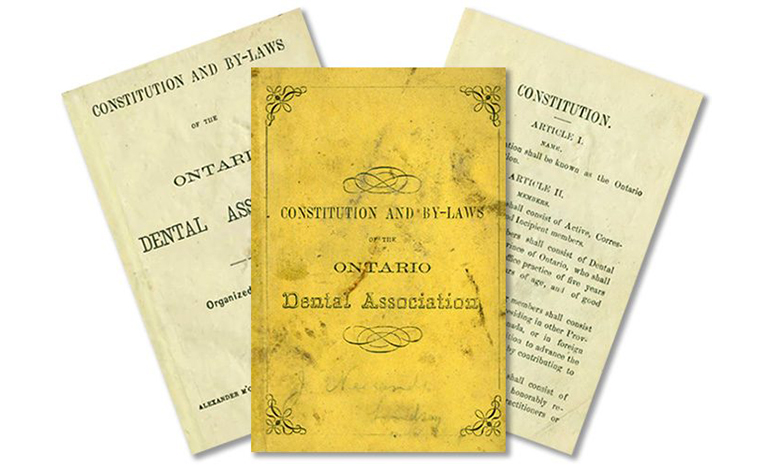
Word soon spread of Day’s new dental organization, and by July 1867, 31 dentists had joined the cause. Day’s draft ODA Constitution and Bylaws was approved at the second association meeting at Victoria Hall in Cobourg, Ontario, marking a major moment for this groundbreaking organization. Day’s document defined membership requirements and codified the association’s commitment to shared knowledge and professional development.
Always a man of vision, Day’s long-held belief that Canada was on the cusp of change proved accurate: it was Tuesday, July 2, 1867, just one day after the birth of the Dominion of Canada, that the association changed its name to the Dental Association of Ontario.
Just six months after the July 1867 Cobourg meeting, the Dental Association of Ontario held a meeting in Toronto at St. Lawrence Hall to discuss a petition to the province for an act to regulate dentistry. Day and others went to work, and by 1868, Day and his supporters marched to the legislature to watch Dr. George Boulter, MPP for Hastings North, present a proposed bill to the house. The petition had the signatures of 68 dentists, 25 physicians, a pharmacist, a judge and the mayor of Toronto. An Act Respecting Dentistry received third reading in the Ontario legislature on March 3, 1868.
The provincial An Act Respecting Dentistry put control of the profession into the hands of just 12 people ‒ the members of the Board of Directors of the Royal College of Dental Surgeons of Ontario. They had the right to self-govern and were the sole authority to grant licences to practise dentistry in Ontario, control dental education in the province and enforce the standards required for practicing dentists. Critically, the board also had the right to hold dentists criminally liable if they remained unlicensed.
In 14 months, Barnabas Day had organized a professional association of dentists united under a constitution, led the way in petitioning the provincial government, shepherded the Act Respecting Dentistry, and established the right for his profession to self-regulate.
It was therefore only fitting that on April 14, 1868, Barnabas Day was elected president of the newly formed Board of Directors of the Royal College of Dental Surgeons of Ontario (RCDSO). Subsequently, the board formulated educational requirements stipulating that only students who had completed a two-year dental apprenticeship be allowed to take a final examination to become a dentist.
Still, by 1875, the successor organization to the Dental Association of Ontario, Ontario Dental Society (ODS), had recognized an urgent need for an official college to train these young students. ODS members adopted a unanimous resolution urging the RCDSO to consider creating a college, and the board agreed. Owned and funded by the dentists of Ontario, and pioneered by the RCDSO’s James Branston Willmott and Luke Teskey, The Royal College of Dental Surgeons (RCDS) opened in November 1875.
Then just a small, two-room school at 46 Church Street in Toronto, the RCDS started with a mere 11 students. Nonetheless, this upstart school provided free dental care to 120 patients, and the RCDS was Canada’s only dental college until 1892. By 1925 the College became the faculty of dentistry of the University of Toronto.
Even with the establishment of trained, regulated Royal College of Dental Surgeons (RCDS) dentists, in 1889 many dental practitioners were still advertising in newspapers and on billboards, making dubious claims of superiority over other dentists, while charging fees that were too low to provide proper care. Even worse, in spite of their best efforts, the Ontario Dental Society and RCDSO struggled to stop large numbers of illegal, untrained dentists from practising in Ontario. With the image of the dental profession again tarnished, the need for a Code of Ethics was apparent.
It was from this crisis that the Ontario Dental Society gathered at the Masonic Temple in London, Ontario, and drafted a Code of Ethics. Adopted in the summer of 1889, the Code banned newspaper and handbill advertisements, the promotion of discount services, the advertising of free teeth extraction on specific dates, and any claim of a dentist’s superiority over other dentists. Violation of the Code of Ethics would result in expulsion from the society. The Code virtually eliminated dishonest professional advertising in Ontario.
With the Code of Ethics in place, the Ontario Dental Society moved forward in June 1889 with its first scientific meeting in London, Ontario. This convention included presentations, clinical demonstrations and even entertainment. Eventually, this scientific meeting became an annual event, growing in size each year. Today, it is known as the Ontario Dental Association’s Annual Spring Meeting and is one of North America’s premier dental conferences. It hosts more than 12,000 dentists, dental hygienists, dental assistants and other professionals from across Canada and around the world.
ODA In Action
By the end of the 19th century, Barnabas Day had succeeded in sparking change in Ontario with the establishment of a professional dental association, a permanent dental college and a dental Code of Ethics. Dentistry had become a respectable profession to aspire to.
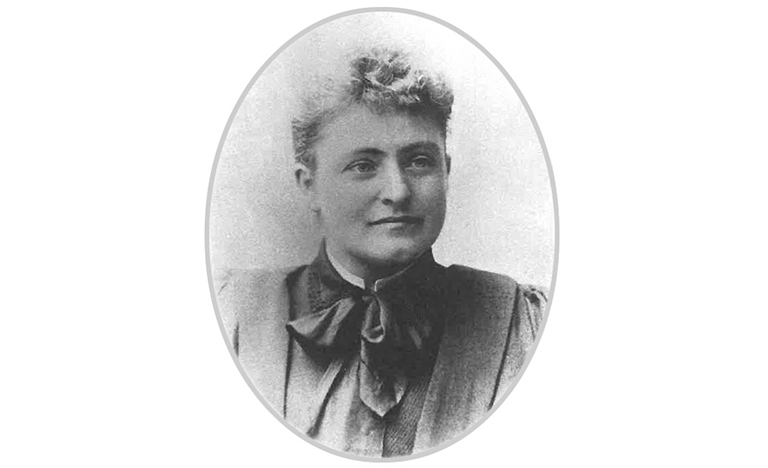
It was amid this atmosphere of change that Dr. Caroline Louise Josephine Wells broke Ontario’s dentistry gender barrier in 1893. Wells became the first female member of the Ontario Dental Society and the first female graduate of the Royal College of Dental Surgeons (RCDS).
Determined to overcome the tremendous social and economic pressures facing her, Wells sent her three children to live with relatives while she completed her schooling. Her entry into the profession opened the way for other women in Ontario, signalling the end of male exclusivity in Ontario’s organized dentistry. For the next 36 years, Dr. Wells practised in Toronto, providing groundbreaking dental care to patients in several of Ontario’s mental hospitals.
By the early 20th century, the Industrial Revolution had arrived in Ontario, bringing with it social problems and concerns over public health. The Ontario Dental Society (ODS) saw a need to educate, believing that prevention was always a better solution than treatment. ODS member Dr. John Gennings Adams, the first dentist of record at the Hospital for Sick Children in Toronto and a man who treated poor children, likewise saw the need to educate. Together with the ODS he was the first to bring pressure to bear on the Ontario government to institute a province-wide program to inspect and restore the teeth of schoolchildren.
While funding for ODS-led educational efforts was sparse, a breakthrough on the public oral-care front occurred when it was discovered that sugar was the primary ingredient in toothpaste. The ODS quickly developed its own safe alternative, and with the profits, was able to distribute oral hygiene literature, administer oral hygiene programs and continue to lobby governments to introduce dental screening programs for schoolchildren. In 1909, the ODS formed a permanent Educational Committee, led by chairman Wallace Seccombe, to develop public awareness of oral hygiene, education and literature, while finding ways to care for the teeth of the poor.
Eventually, thanks to ODS efforts, the Toronto Board of Education took responsibility for children’s dental health by hiring a dental inspector. The ODS then convinced the City of Toronto to open a dental clinic to treat local children. Within a year, positive results were apparent, with some children displaying a 54 percent increase in educational proficiency after receiving care.
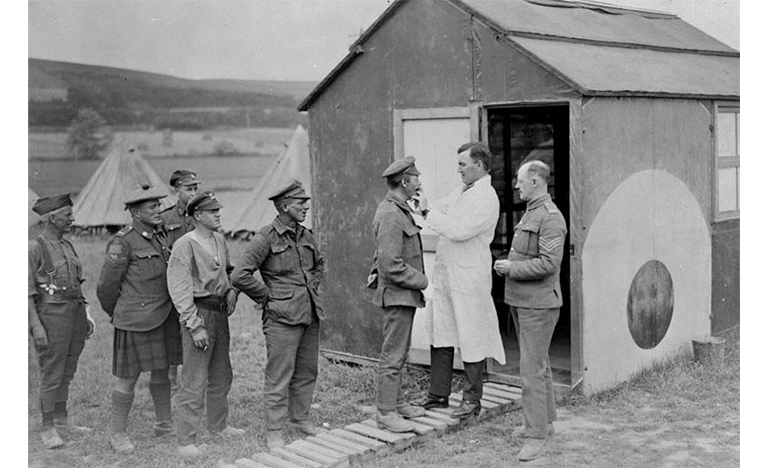
When the First World War broke out in 1914, many Ontario Dental Society (ODS) members enlisted in the Canadian Army Medical Corps. In 1915, ODS members Edmund Grant, Richard Hull, Orvil Elliott and George Gow did their part for the war effort when they were tasked with launching and operating a dental clinic to treat new recruits on the Canadian National Exhibition grounds. Open seven days a week, the clinic played an important role in restoring the teeth and oral health of Canada’s soldiers.
Inadvertently, the clinic also aided the Canadian Dental Association’s push to form a separate dental branch within the military. Soon after the Exhibition Clinic opened, Sir Sam Hughes, Minister of Militia, made an official inspection of the grounds. A few weeks later, honorary lieutenants Grant and Hull received an order from Hughes to come to his headquarters in Ottawa to report on the dental fitness of recruits. There, they learned the excellent performance of the Exhibition Clinic was a key factor in Hughes’ decision to form the Canadian Army Dental Corps.
The post-war 1920s were an era of unprecedented economic growth and opportunity. Even the Ontario Dental Society incorporated, in the process reverting to its current name, the Ontario Dental Association (ODA). The good times came to a grinding halt, however, when the country’s economy was decimated by the stock market crashes of 1929, bringing about the Great Depression. Much as they had in the First World War, the ODA and its members took it upon themselves to help their community during this time of crisis.
ODA dentists continued to provide care at reduced or no cost for the growing number of poor and unemployed. The Toronto Academy of Dentistry opened a free clinic at Spadina House, in 1931, while Dr. Robert Reade, chairman of the ODA Oral Hygiene Committee, forged a partnership with the Peterborough Dental Society to open a free clinic in the Ovaltine Plant in Peterborough, Ont.
The ODA also began working to help struggling dentists continue to serve their communities. At the 1930 Annual Spring Meeting, a Benevolence Committee was created to raise and manage emergency funds. It disbursed $1,492.08 to help struggling members, some of whom had been forced to sell their homes and move their families into the back office of their practices.
As the Depression wore on, the ODA recognized a need to reach remote Ontario communities, and encouraged the provincial government to secure a railway dental car to bring treatment to northern Ontario. The dental train began service in 1931, thanks in large part to the Canadian Pacific Railway’s contribution of the car and free haulage. Staffed by ODA members and remodelled and equipped with funds raised by the Rosedale chapter of the Imperial Order of the Daughters of the Empire, the train replicated a modern dental office on rails. Throughout its several years of operation, the train provided professional dental services to isolated communities along the Canadian Pacific Railway lines, helping ensure that Ontarians in need of care had help they could rely on.
With the outbreak of the Second World War in 1939, the Ontario Dental Association (ODA) took action much as it had in 1914 during the First World War.
At the May 1940 ODA meeting, it was announced that dentistry’s contribution to the cause would be supplying sufficient men to staff the Canadian Dental Corps. President Dr. George V. Morton made a call for a “sacrifice for the common good” and strived to inspire members who hadn’t already enlisted to join the fight. Many of the ODA’s most experienced members joined the armed forces, which by this time had formed 24 dental companies comprised of 24 officers and 80 men.
The No. 1 Field Dental Company had left Canada late in December 1939 with the First Canadian Infantry Division, but as the war spread, additional dental detachments served in France, Iceland, Sicily and Italy. The Canadian Dental Corps grew to 1,562 dental officers with 3,725 enlisted personnel of whom 748 officers and 1,747 enlisted personnel served overseas. Before the war ended, 14 of those officers and 19 enlisted personnel were killed or had died in active service.
Today, the Royal Canadian Dental Corps, which consists of dentists from across Canada, continues the tradition of providing high-quality dental care at home and abroad for Canada’s Armed Forces.
To learn more about the history of the Royal Canadian Dental Corps please visit the Canadian Dental Association website.
Growth Of Dentistry
The end of the Second World War and the return of Canada’s veterans gave rise to the baby boom and a growth in dentistry. As the dental profession grew, so too did the belief that preventative care was essential for protecting teeth. In 1946, the Ontario Dental Association (ODA) and Canadian Red Cross launched a pilot preventive program in the Niagara district. A specialist trained in dental public health provided education to parents, regularly inspected children’s teeth and performed treatments in local dental offices. Two years after this program began, the overall dental health of children involved in the program improved, while other municipalities recorded annual increases in the number of childhood dental extractions and fillings.
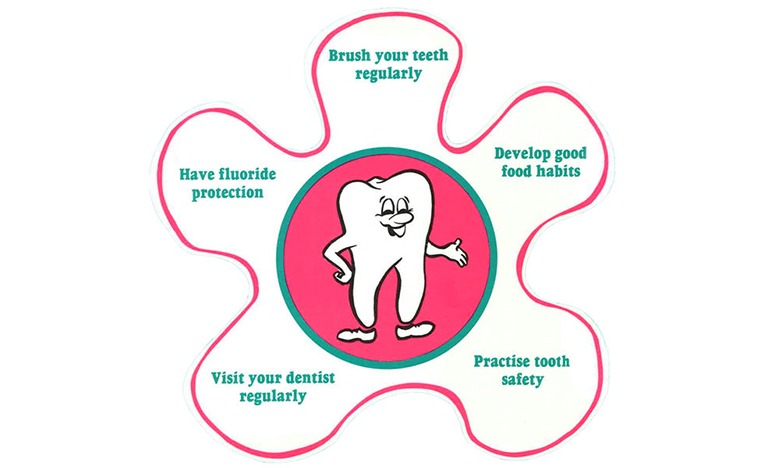
This pilot program marked a turning point in dental public health in Ontario, as the project quickly attracted the interest of health authorities in other municipalities throughout the province. The lasting impact of these educational efforts were reflected in the Ministry of Health’s “Murphy the Molar”, a public education campaign piloted in part by public health dentist and ODA member Dr. Samuel M. Green.
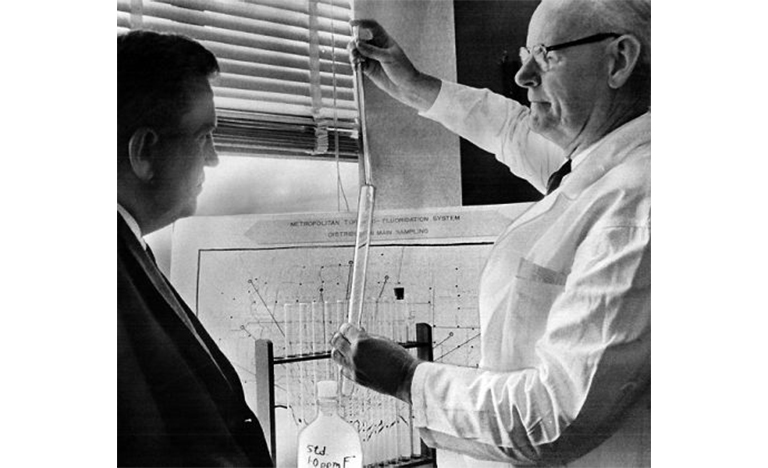
In 1945, the Canadian and American governments began a joint research study to examine the effects of water fluoridation on tooth decay. Brantford, Ontario, was one of the test cities chosen, and within five years results showed that children who drank fluoridated water had 60 per cent fewer cavities than those who had not. By 1952, Toronto’s Board of Health approved community water fluoridation as a safe and cost-effective tool for fighting tooth decay, however this landmark development in health care was not without its share of controversy, and it wasn’t until 1963 that the City of Toronto began water fluoridation.
On the CBC television show Front Page Challenge a notorious debate over fluoride pitted broadcaster Gordon Sinclair against Ontario Dental Association member Dr. Wesley Dunn. Sinclair argued fluoride was “rat poison,” while Dunn cited the science and facts that had already convinced the medical community that fluoride was safe and essential for helping prevent tooth decay. While science ultimately prevailed and many Ontario communities began water fluoridation, unfounded fears and conspiracy theories continued to make fluoride a controversial issue.
In 1958 the Ontario Dental Association (ODA) took over a provincially funded program for children’s dental care that had been negotiated by the government of Ontario and the Royal College of Dental Surgeons of Ontario. Tasked with administering a dental program for dependent children and foster-children under 16 years of age who qualified under the Mothers’ and Dependent Children’s Allowances Act, the services covered by the government were limited, and the level of funding for dentists often didn’t cover the costs of treatment. It didn’t take long for patients and the ODA to realize the program needed improvement.
The ODA believed that preventative programs and education were essential, so their proposed solution came in 1971 with the “dental plan for children.” The plan called for incremental care “to make the benefits of dental health education, preventive dentistry and dental care available to all children and young adults, up to and including those 18 years of age.”
Today, the ODA and its members continue to advocate for prevention, education and access to care for all Ontarians.
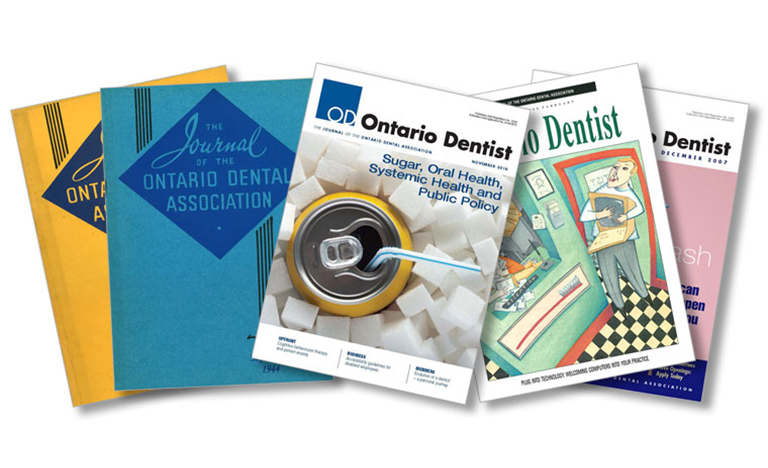
The Ontario Dental Association (ODA) strived to keep members informed on the scientific and professional front, and one of its earliest and most successful communications tools was the journal. In 1926, Dr. Frederick J. Conboy sensed the need for an ODA publication to keep Ontario’s dentists up to date on the latest oral health news, and he started a publication called The Booster. In 1931, the name was changed to The Journal of the Ontario Dental Association in formal recognition of its growing scientific credibility.
Since its inception in 1926, the ODA journal has had dentist-editors involved in its production and it remains one of Canada’s most well-read and trusted professional dental publications. In 1972, the title of the Journal was abbreviated to the more modern Ontario Dentist.
In the fall of 1985 the capitation insurance payment structure was introduced in Ontario. It allowed insurance carriers to pay dentists a flat rate for each patient, regardless of the level of treatment required. This plan also forced patients to see dentists designated by the insurance carrier ‒ a violation of the Ontario Dental Association’s (ODA) Code of Conduct’s requirement that patients were permitted choice.
The ODA was determined to fight back against capitation, creating a public awareness marketing campaign, No Dentists, No Capitation, to explain capitation’s substantial drawbacks. The impact of the ODA’s public awareness plan was almost immediate. Loyal ODA members began to flood ODA Headquarters with contributions for the public education campaign. ODA members gave anti-capitation speeches to the dental students at dental faculties. Individual members took time to tell their patients that they might not have free choice of dentist, office or treatment, while ODA staff talked directly with organizations who were considering buying capitation plans, informing them of the dangers.
The ODA’s No Dentists, No Capitation campaign made headlines, while uniting ODA members and the public against an insurance program that would eliminate choice for patients while financially hamstringing dentists. By the end of 1987 insurers were promoting seven different types of capitation programs in Ontario, backed by millions of dollars of capital, yet had managed to sign up few more than 100 dentists. Two years after it was first introduced capitation had failed to make an immediate or lasting impact in Ontario.
In 1988, the Canadian Dental Association established a national Electronic Data Interchange network that linked insurance carriers with dental offices via telephone lines and computers. For the first time, technology allowed Ontario dental offices to submit dental insurance claims electronically. In 1990, after much debate over the potential cost and learning curve of the technology, the Ontario Dental Association officially backed the tool, bringing EDI to dental offices across Ontario, simultaneously saving patients and dentists the time and expense of manually filing their insurance claims.
In February 1994, federal the Finance Minister Paul Martin announced he would consider taxing health and dental benefits in the following year’s budget. The Ontario Dental Association (ODA) formed a Task Force on Taxation and quickly voiced its concerns. Then ODA President Dr. Rick Bossin wrote: “If the government decides to tax dental plans, the total dollar amount paid by the insurance industry for dental treatment would be slashed by 40 per cent. . . . Patients would visit the dental office less frequently and optional treatments would be delayed indefinitely. As a result, the oral health of the people of Ontario would suffer. Those most affected include young families with children and elderly citizens who have managed to maintain their teeth for a lifetime.”
In January 1995, the ODA’s Task Force on Taxation committed to work with the Canadian Dental Association, as it launched a national advertising campaign to inform the public. Simultaneously, the ODA began to lobby Ontario’s MPs. As a result of the campaigns, patients and dentists sent more than 200,000 letters to federal MPs demanding an end to the proposal on a health and dental benefits tax. The all-hands-on-deck approach worked, and by the time federal Finance Minister Martin delivered his 1995 budget, any mention of a tax on health and dental benefits was gone.
By the 2000s, the Ontario Dental Association (ODA) had embraced a spirit of collaboration with its peer organizations. In 2006, senior ODA staff met with the executive of the Ontario Association of Public Health Dentistry to find common ground, and agreed to work towards promoting community water fluoridation, smoking cessation, and other dental public health activities.
The ODA pursues partnerships with organizations that help to increase awareness of the connection between oral health and overall health. Some of our past collaborations have included: the Ontario Medical Association on reducing sugar intake during Halloween; the Canadian Diabetes Association on the relationship between diabetes and oral health; and the Dietitians of Canada on the role nutrition plays in good oral health. In 2012, we partnered with the Centre for Addiction and Mental Health’s TEACH Project on the topic of tobacco cessation for Oral Health Month.
Most significantly, the ODA met with the Canadian Dental Association (CDA). While the ODA and CDA shared many common goals,there were occasions where both organizations unintentionally competed for the same members. To resolve this, in 2009 the Canadian Dental Association signed a National Memorandum of Understanding to clarify the roles and responsibilities of the CDA and its corporate members, the provincial dental associations. Competition for members ended, creating a streamlined and improved governance, and a united political and public voice to advocate on behalf of oral health care and oral health care professionals.